• Home
  • Notes
  • Field Notes: An Artist’s Way Journey
  • Visual Archive
  • Sign In My Account
Menu

The Slow Archive

An invitation to reflect, create, and survive gently.
  • Home
  • Notes
  • Field Notes: An Artist’s Way Journey
  • Visual Archive
  • Sign In My Account

Morning Pages, Artist Dates, and the Myth of Doing It Right

August 27, 2025

For years, The Artist’s Way sat on my shelf like a dare.
I thought it was a workbook for blocked creatives.
Turns out, it’s more like a mirror — and most people are reading it wrong.

There’s a quiet rebellion in not replying. In letting the message sit, unopened, while you return to your own rhythm. The Artist’s Way doesn’t just teach you to make art — it teaches you to reclaim your time, your attention, your sacred mornings. It reminds you that not every ping deserves your presence, and that choosing yourself isn’t selfish — it’s the beginning of creative integrity.

Julia Cameron’s The Artist’s Way is often described as a twelve-week program for “creative recovery.” It’s built around two core practices:

  • Morning pages: three pages of stream-of-consciousness writing done daily

  • Artist dates: weekly solo outings to nurture your inner artist

The book promises transformation — but only if you follow the rules.
And that’s where most people get stuck.

Because The Artist’s Way isn’t just for painters or poets. It’s for anyone who’s lost touch with their creative self — whether you’re a burned-out entrepreneur, a stay-at-home parent with a story to tell, or someone who hasn’t made anything in years but still feels the pull.

It’s not about becoming an artist.
It’s about reclaiming your creative sovereignty.

My Four Encounters with the Book

I didn’t just read The Artist’s Way once and feel transformed.
I read it four times.

Actually — twice I read it, twice I listened to the audio. And each time, I got something different:

  • First read: I skimmed it. Took notes. Made plans. Then forgot about it for years.

  • First listen: I talked about it with my partner and friends. Let the ideas swirl.

  • Second listen: Let it play while I did chores. Absorbed it passively.

  • Final read: Worked through it week-by-week, but on my own terms.

That last round was the one that stuck.

I didn’t try to do every exercise.
I didn’t punish myself for skipping a day of morning pages.
I didn’t chase transformation like it was a prize.

Instead, I followed Cameron’s real advice — the one most people overlook. On page 4, she writes:

“There are a number of ways to use this book. Most of all, I invite you to use this creatively.”

It wasn’t just permission — it was a challenge.
A reminder that The Artist’s Way isn’t a rigid syllabus. It’s a living invitation.

Cameron doesn’t say “Take what resonates, leave the rest,” but that’s exactly what I heard.
That’s what I needed.

So I did.

I stopped trying to follow every rule.
I stopped measuring my progress by how many exercises I completed.
I started listening to my own rhythm.

And that’s when the book started working — not because I did it “right,” but because I did it my way.

Morning Pages: A Ritual, Not a Rule

Let’s talk about morning pages.

People love to debate them — what size notebook, what time of day, whether drawing counts.

Here’s my take:
Morning pages are a writing ritual.
Not a drawing exercise. Not a productivity hack.
Just a quiet moment to dump your thoughts and listen to your own mind.

I used cashier notebooks (5.75" x 8.75", college-ruled).
I wrote three pages. Sometimes more.
I didn’t use a timer. I didn’t stress about the time of day.

Yes, I sometimes wrote at night, and the topics were still the same.

But writing in the morning grounded me.
I’d sit on my upstairs porch, coffee in hand, watching squirrels and birds.
That little moment made the habit stick.

It wasn’t just about writing — it was about presence.

Sometimes my pages were glorified to-do lists.
Sometimes they were rants about people who got on my nerves.
Sometimes they were just noise.

But they always showed me where my mind was drifting.
And that was enough.

Artist Dates: Dating Yourself Without the Pressure

Artist dates are another point of confusion.

People think they have to be solo, elaborate, or deeply “artistic.”
But really, they’re just about giving yourself space to breathe.

My favorite artist dates?

  • Going to the movies alone

  • Grabbing a drink and sitting outside

  • Cruising through a different part of town

  • Wandering the dollar store and buying randoms

  • Getting excited about a tiny toy I could roll across my desk during mental timeouts

You don’t need hours.
You don’t need solitude.
You just need intention.

An artist date can be 30 minutes walking around the block.
Or sitting in your car listening to music.
Or buying something silly and letting it spark joy.

It’s not about performance.
It’s about presence.

Your Way Is Enough

If you’re holding The Artist’s Way like a dare — wondering if you’ll do it “right” — maybe it’s time to put the book down and listen to yourself.

What would creative recovery look like if it felt like joy instead of discipline?
What would your morning pages say if you stopped trying to impress them?

You don’t need a twelve-week plan to reclaim your creativity.
You just need a moment. A notebook. A little space to breathe.

So here’s your invitation:

  • Try one thing this week that feels like a love letter to your creative self.

  • Write something messy. Go somewhere silly. Leave someone on read.

  • And trust that your way is enough.

🌿 Milna Cultivates

Good Things Good Days — essays on creativity and becoming.

Originally published on Medium by Milna Cultivates.
The Creative Leap: Trusting Your Process Without a Roadmap

August 14, 2025

This reflection marks the end of my twelve-week journey through The Artist’s Way — specifically, Chapter 12: Recovering a Sense of Faith. But this isn’t the first time I’ve read the book. I’ve returned to it over the years, each time finding something different, something deeper. These essays are a culmination of that ongoing relationship — a living archive of what surfaced this time around.

Over the past twelve weeks, I’ve wrestled with inherited beliefs, creative blocks, and the slow rebuilding of trust in my own voice. This final chapter brought me to tears — not because it was sad, but because it named something I’ve carried for years: the quiet rules I was raised with.
 “Don’t speak your dreams until they’ve happened.” That was my mother’s mantra. I saw how it worked — our family rose from a basement to six figures by keeping goals close to the chest. Silence was protection.

But her advice wasn’t about suppression — it was about discernment. She knew that the wrong people could disrupt your creativity before it had a chance to grow. I’ve come to understand that for myself: not everyone deserves access to your dreams. You have to choose who you share with. You have to protect the fragile beginnings of your ideas from premature judgment or misunderstanding.

Still, somewhere along the way, I realized that silence can also become a cage. The Artist’s Way helped me see that trusting the creative process isn’t about broadcasting everything. It’s about showing up for yourself — even when the roadmap is missing. Even when the leap feels reckless.

Trust: The Leap Comes First

Trust doesn’t begin with certainty — it begins with motion. Even with AI in our pockets and endless information at our fingertips, we still have to leap before we feel ready. That’s the paradox: you won’t be 100% prepared, and that’s okay.

Manifestation isn’t just about believing in the outcome — it’s about believing in yourself enough to begin. You may not land exactly where you imagined, but you’ll be closer than if you never tried.

For me, trusting the process meant unlearning the idea that silence was the only safe way to dream. It meant naming my goals — not just to myself, but to people who support my creativity. We need outside support, but we need to be selective. Not everyone deserves access to our dreams. Treat yourself like a precious object. Don’t let the nay-sayers interject before the idea has even taken shape.

Mystery: Let the Process Lead

Mystery asks us to loosen our grip. Creativity isn’t something we master — it’s something we accompany. We’re not meant to control the process, but to stay open to it.

Four years ago, I was offered a job teaching crafting at a community center. I said no. I was scared to rock the boat. I had a stable job, bills to pay, and no clear roadmap. But the truth is, I’ve always found a way to keep the lights on. That fear — the fear of leaping without a guarantee — clouded my ability to see my own resourcefulness.

Mystery doesn’t promise clarity. It asks for openness. It asks us to say yes before we know where it’s going. It reminds us that we are capable, even when the path is uncertain.

Imagination at Play: Loosen the Grip

This section reminded me of Blue Crush — or any sport movie where the protagonist is blocked by fear, tightness, overthinking. The breakthrough always comes when they loosen up. That’s the arc: fear → tension → surrender → flow.

I felt that same tightness during Wednesday night physics tutoring. I’d cry through problem sets, convinced I had to solve everything right now. But when I walked away — when I slept — the answers often came. It wasn’t magic. It was me. I just needed to relax enough to let my brain do its work.

Creativity works the same way. When you’re stuck, step back. Play. Wander. Let your imagination stretch without pressure. The answers will come — not because you forced them, but because you made space for them.

Escape Velocity: Leap Without Permission

Escape velocity is about breaking free from the gravitational pull of fear, doubt, and inherited caution. It’s about leaping without waiting for perfect conditions.

To do that, you need support. Not everyone deserves access to your dreams. Don’t lean on people who don’t understand your creative life. Find your tribe — the ones who hold your goals with care, not skepticism.

You don’t need a roadmap. You need momentum. You need trust. You need the courage to leap, even when the landing is unclear.

Let the Journey Be the Reward

You don’t have to tell everyone your dreams. But you do have to tell yourself. You have to name what you want, even if it’s fragile. You have to leap, even if the ground isn’t visible yet.

Faith isn’t loud. It’s steady. It’s the quiet decision to begin.

And once you begin — don’t rush the destination. Let the journey be the reward. Let the process surprise you. Let your creativity unfold on its own time.

This piece closes my twelve-week reflection series on The Artist’s Way, ending with Chapter 12: Recovering a Sense of Faith. If you’ve followed along — or if you’re just arriving now — thank you for witnessing this process. Faith, for me, isn’t a finish line. It’s a practice. And this chapter reminded me that the creative path isn’t about certainty — it’s about showing up, again and again, even when the map is missing.

🌿 Milna Cultivates

Good Things Good Days — essays on creativity and becoming.

Originally published on Medium by Milna Cultivates.
Creative Sovereignty: Recovering a Sense of Autonomy in a Hustle-Driven World

August 7, 2025

In a culture obsessed with hustle and performance, creative sovereignty offers a quieter path — one rooted in ritual, rhythm, and radical self-trust. This reflection explores how artists can reclaim autonomy in a world that commodifies creativity, and why success isn’t about speed or spectacle, but about knowing how you work and honoring that truth. If you’re tired of formulas and ready to return to presence, this is for you.

Displacement in the Age of Hustle

In a time when blogs overflow with quick-money schemes and productivity hacks, I often feel displaced. The culture of copywriting — churning out hundreds of articles on how to make $5,000 in a week — rarely feels genuine. Nor does the trend of artists selling their transformation into business moguls. I don’t want another workshop on monetizing my art. I want to be taught how to live with it. How to relax. How to survive my forties with grace and creativity.

This kind of writing — formulaic, performative, and often disconnected from real life — chokes the deeper culture of art and living. It replaces magic with metrics.

Autonomy Isn’t Just Freedom — It’s Fit

Week 11 of The Artist’s Way invites us to recover a sense of autonomy. Autonomy means the ability to make decisions that reflect who we truly are — not who we’re trying to become to fit in.

Social media has warped how we communicate our creativity. Once, we made things without an audience. Now, every craft risks becoming a commodity. And when we finally get good at something, we’re told to sell ourselves. Some artists pivot entirely, becoming self-proclaimed copywriters teaching others how to gain followers. It’s disorienting.

I don’t visit your website to learn how you built a brand — I came to see what you create. I came to be immersed in your ideology, not your marketing strategy.

This Isn’t a Checklist — It’s a Conversation With Yourself

If you’re going through The Artist’s Way, know this: it’s not a book to “complete.” It’s a mirror. Read the chapters more than once. Take what resonates. Leave the rest. Skip a task if it feels off. That’s okay. The real work is learning yourself — because you’re the one you’ll be living with for the rest of your life.

Know Your Rhythm, Not Just Your Resume

I used to write resumes for people. Often, they struggled not because they lacked skills, but because they didn’t know themselves. Don’t take a night shift if you don’t function well at night. Don’t apply for a multitasking-heavy role if it drains you. Yes, discipline can be learned — but sometimes the real shift is changing your routine, not your personality.

Understanding how you work is the foundation of feeling successful. Julia Cameron writes, “As an artist, I do not need to be rich, but I do need to be richly supported.” You won’t know what kind of support you need until you know yourself.

Misaligned Aspirations and the Myth of Discipline

We live in an era of infinite information. But that information often pushes us toward aspirations that don’t fit our temperament, values, or capacity. If you function better at night, waking up at 5AM won’t make you a better version of yourself — it’ll make you miserable.

Some things can be learned. But some things are misaligned. The key is knowing the difference.

Creativity Is a Spiritual Practice, Not a Product

Cameron reminds us: “Creativity is a spiritual practice. It is not something that can be perfected, finished, and set aside.” One of my favorite professors, Randy Rumley, used to say that every piece of writing has room for improvement. Creativity doesn’t have a finish line. Sometimes a piece takes years to feel “done.”

Success isn’t about speed or replication. It’s about balance — between obligations and creative needs. It looks different for everyone. Don’t compare your rhythm to someone else’s highlight reel.

The Zen of Sports and the Joy of Movement

Cameron talks about “moving meditation” — just twenty minutes of physical activity a day can shift your energy. My own ritual is simple and a little silly: I walk around the block listening to music and bouncing a light-up bouncy ball. It started as a quirky obsession, but it became a way to connect with people, regulate my mood, and start my day with joy.

Find your own version. It doesn’t have to be serious. It just has to work.

Build Your Artist Altar

Morning pages are a form of meditation. For me, they’re easier than sitting still — I just write without thinking and move on with my day. Cameron also suggests building an altar with things that make you happy. I’ve done this since childhood: shelves with figurines, found objects, and notes.

Altars don’t have to be religious. They’re spaces of peace. My altar is scattered: an enclosed porch surrounded by trees, a velvet mattress by my book nook, a shelf of trinkets and incense. When I burn incense, my body knows — it’s time to create.

Create your own ritual. Cue your body into rhythm. Let your space support your spark.

The Pace Is the Portal

Creative sovereignty isn’t something we earn through hustle — it’s something we reclaim through rhythm, ritual, and radical self-trust. The world may try to sell us formulas, but our art asks for presence. So build your altar. Bounce your ball. Write your pages. And remember: your pace is not a problem. It’s a portal.

You don’t need to monetize your magic to prove it’s real. You just need to show up for it. Whether that means walking with a bouncy ball, burning incense, or writing morning pages, your rituals are valid. Your rhythm is enough. Keep learning yourself. Keep creating from that place.

We are on a journey, and the destination is death. So stop trying to get there already. Learn how you work, and adjust for that — because real success isn’t speed or spectacle. It’s knowing yourself well enough to live in alignment, to create with joy, and to make peace with the pace that’s yours alone.

If this reflection resonated, I’d love to hear how you’re reclaiming your own rhythm. What rituals help you show up for your creativity? Share your thoughts below, or simply take a moment to honor your pace today.

I’m slowly building a public archive through my studio, Good Things, Good Days — a space for ritual, affirmation, and creative sovereignty. If you’re on a similar path, seeking presence over performance, I’d be honored to connect. Feel free to like, comment, or follow along on Medium or visit goodthingsgooddays.com as this journey unfolds.

🌿 Milna Cultivates

Good Things Good Days — essays on creativity and becoming.

Originally published on Medium by Milna Cultivates.

Week 10: Protecting the Spark — What The Artist’s Way Taught Me About Creative Sovereignty

August 7, 2025

Julia Cameron’s The Artist’s Way has a curious rhythm to it. Just when you feel like the practices are becoming routine, she drops something quietly radical. Week 10 is one of those chapters — a reminder that recovering creativity is also about defending it. She calls it “Recovering a Sense of Self-Protection,” and for me, it became the week I stopped letting my laundry schedule outrank my voice.

The chapter explores five terrain markers for the recovering artist: dangers of the trail, workaholism, drought, fame, and competition. Below are my reflections, missteps, and moments of clarity as I moved through each.

Dangers of the Trail: The Distraction Loop

Cameron writes, “When we are clear about who we are and what we are doing, the energy flows freely and we experience no strain.” But clarity isn’t always the starting point — it’s often a hard-won return. Creative blocks can show up dressed as habits: chain-smoking, sugar highs, or even glorified busyness.

Me? I’ve been spectacularly skilled at keeping busy. Laundry becomes a marathon. Errands stretch into epic quests. I remember hearing an illustrator on a podcast say she found creative time by hiring someone to clean her house. At first, I scoffed — who has money for that? But it planted a seed: maybe the issue wasn’t time but priority.

So I stopped trying to do everything. Sometimes the house looks like a bomb hit it. That’s okay. It’s not only my responsibility anyway.

Instead, I began claiming time when my partner’s schedule overlapped with quiet. That became sacred creative space — when they’re working, I’m building. Even if I’m tempted to clean for two hours, I keep an end in sight.

Years ago, applying to ESF Ranger School meant qualifying with math and science coursework that didn’t come naturally to me. But I committed anyway. No “maybe tomorrow,” just deliberate steps. Creativity deserves that same urgency.

Takeaway: Start by identifying your preferred distractions — not to shame them, but to interrupt their power. Treat your creative time like a non-negotiable appointment. Real momentum begins with a single protected block of time.

Workaholism: When Hustle Masks Fear

Cameron names workaholism as addiction. It can look deceptively healthy — it pays bills, gets praise, keeps you “on track.” But when work becomes your only access to joy or worth, it backfires.

I’ve lived this. As a kid, “fun” was a privilege I rarely got. I was always grounded by default — often just for having friends. So I learned to attach purpose to play: earning Girl Scout badges gave me excuses to go outside. Later it was religious instruction, extracurriculars, anything that felt “productive.”

Even now, I struggle to create without purpose. It doesn’t feel natural — but I’m practicing. Blocking out just one hour for play or art nudges me away from constant output, even if it feels awkward.

The biggest shift? Stepping away from glorifiers of grind culture. Once, I had friends who treated sleep deprivation like a badge of honor. That lifestyle wasn’t mine, so I gently withdrew. Growth requires boundaries — even with people who mean well but don’t mirror your intentions.

During Ranger School, my mom emailed me constantly — not with encouragement, but messages predicting my failure. That should have been a once-in-a-lifetime experience. Instead, it became survival. That season taught me: protect your path. Turn down the noise.

Takeaway: Redefine your relationship with productivity. Choose companions who validate your creativity, not just your output. Give yourself permission to play — even if it feels unfamiliar.

Drought: When Nothing Comes

The dry spells are real. Cameron calls them droughts — and not as failures, but seasons. She urges us to write through them using Morning Pages.

I’ve journaled since grade school, often encouraged by teachers and professors to track my emotional and mental pulse. Morning Pages aren’t about being brilliant — they’re about showing up. Noticing patterns. Asking why you skipped the pool invite from Sally three weeks in a row. They help us hold dialogue with ourselves — especially when creativity goes quiet.

Takeaway: Don’t wait for inspiration to return before you write. Use Morning Pages to build the bridge back to yourself. The dialogue you start on paper may be the one that reopens your creative channel.

Fame: Poison in the Wrong Dose

Fame is described by Cameron as a byproduct, not a goal. Focus on the work — not how it’s seen.

This one lands hard. I’m building videos with voiceovers, and I have a speech impediment. I worry constantly about how I sound, whether I’ll be taken seriously. But deep down, I know: it’s not the polish — it’s the substance.

I remind myself of Cameron’s mantra: “Treat yourself like a precious object; it will make you strong.” That sentence felt odd at first, but I get it now. We need pep talks. Sometimes daily.

Imperfect speech doesn’t make my voice less important. My story matters. Someone out there might hear it and realize they have a story too.

Takeaway: Let your truth lead. Let your imperfections breathe. Don’t let fear of perception rob you of the impact your work can have. Practice telling yourself the words you need to hear — before waiting for anyone else to say them.

Competition: Rewriting the Frame

Competition isn’t a concept I align with — it’s made life harder in ways I couldn’t always name. I want everyone to rise. That desire has led others to run off with my ideas, my momentum. It hurts, but I usually tell myself, “It wasn’t my time.” Maybe that’s overly generous. Maybe it’s just how I cope.

Cameron calls out how we shortcut our own pursuits by saying, “Someone already did this.” But here’s what I know now: everything’s been done, yes — but not by you.

In photography classes, we’d all shoot the same subject, and every image came out with its own energy. Style isn’t just technique — it’s essence. So try the thing you think is stupid. Repeat the experiment. Make it yours.

Takeaway: Let your perspective be the value-add. Stop measuring originality by whether an idea is “new.” Measure it by how true it feels to you, and what your version might bring that no one else can.

Final Thought

The Artist’s Way doesn’t just help you create — it teaches you how to protect what’s sacred in your creative life. This week reminded me that setting boundaries, naming distractions, confronting old wounds, and carving joy on purpose aren’t detours. They’re the path.

Whether you’re journaling through a drought or reclaiming time stolen by laundry lists and noise, you’re doing the work. Paint yourself into a creative corner if you have to. Just show up for the spark.

🌿 Milna Cultivates

Good Things Good Days — essays on creativity and becoming.

Originally published on Medium by Milna Cultivates.

My Creative Block Wasn’t Laziness — It Was Performance Anxiety

August 7, 2025

For a few weeks now, I’ve been craving an easy return to the drafting board — a way to come back to creative rhythm without pressure. Something light. Something like a doodle.

That’s where the idea of a 100-day challenge came in. I thought: This could be it. My tiny way back. Just one scribble a day. Simple.

But before I even started, the project began expanding in my head. It wasn’t just doodles anymore — it was a series. Then came the decisions: what medium, what format, how I’d share it, what kind of pad, whether it should live on my site or turn into something bigger. The weight of making it mean something sent me right back into the stall I was trying to climb out of.

Week 9 of The Artist’s Way — Recovering a Sense of Compassion — met me right in that stuckness. Julia Cameron writes, “The blocked artist does not know how to begin with baby steps.” I felt called out. My “simple” idea had turned into a production before I even touched a Sharpie. The desire to reconnect with my artist child had morphed into trying to build a mountain — again.

This wasn’t new. The previous week’s reflection — “Most of us hate to do something when we can obsess about something else instead” — had already unearthed a pattern: I often quit joyful things before they even begin. I make plans, stack them with complexity, and then freeze. Suddenly, I’m not lazy — I’m blocked, tangled in performance logic disguised as creativity.

Reclaiming the Baby Step

This week reminded me that the smallest start is often the bravest one. That beginning again doesn’t have to look like a comeback or a declaration — it can just be a doodle. A sticky note. A corner cleared on my desk.

Compassion, for me, looks like releasing the need to frame everything. Letting something be unremarkable. Letting it live.

The 100-day challenge is still here. But now, it begins one day at a time, with one sketch that doesn’t need to justify itself.

Optional Reflection Prompt: Archive Your Avoidance

Here’s something I tried that helped me connect the dots:

  • I wrote out three past projects I planned but never started.

  • For each one, I asked myself: What was the point when joy turned into strategy?

  • I noted the shift — and then imagined what a baby version of that project might have looked like.

It wasn’t to guilt myself. It was to understand how my creativity tries to protect itself through expansion. And how I can meet that instinct with a boundary that says: This is allowed to stay small.

If that feels helpful, try it. Or make up your own version. Just let it be light. Let it be yours.

🌿 Milna Cultivates

Good Things Good Days — essays on creativity and becoming.

Originally published on Medium by Milna Cultivates.
I Was Told to Monetize Every Sketch: What I’m Unlearning About Creativity

July 17, 2025

When Survival Becomes Ritual: An Artist’s Way Reflection on Chapter Eight

My mother was a photographer in the army. Not everyone can say that, and I don’t take it lightly. I remember her pulling out her mini studio in our home, posing me with care, treating ordinary moments like memory in the making. Later, she became a homemaker — but never stopped creating. She painted murals on walls and closets she eventually sold. She propagated plants like they were spiritual offerings. She didn’t make a profit, not really. But she made art out of her life.

What confused me most was the contradiction: she told me and my sisters to be independent, discouraged the domestic path she herself lived — but infused that domesticity with creativity and warmth. She encouraged me to draw, to paint, to photograph — and then asked, “How can you make money with this?” That question became the rhythm underneath my childhood art-making. I remember drawing bunnies on postcards in second grade. My mom loved them so much she suggested we sell them in sets of four. Before the internet was even a thing, we sold them in-person — and they went. Effortlessly. That might sound empowering. And maybe it was. But it also planted a seed: If you’re not monetizing your art, what are you doing? Even now, I’ll sit down to create and suddenly think: Will this make money? And that’s where my hands stall.

Survival Isn’t Always About Silence

When I read the Survival section of Chapter Eight, I didn’t connect with the idea of surviving unacknowledged art. My struggle isn’t being ignored — it’s finding a rhythm in my life where art fits. I earned a degree in photography, but I live in a society that doesn’t really celebrate or need photographers. My professor — someone I admired deeply and who is globally renowned — told me I’d need a master’s degree to be taken seriously. But financially, that door wasn’t open. So I stopped at an associate’s and wondered if that meant my creativity would never be respected.

Now, I’ve carved out something different. My rhythm is slower, more intentional. I make videos with public domain text overlays. I sketch with spirit and inquiry. I don’t care if it sells. That’s survival — not in silence, but in refusal to contort my practice to match someone else’s rubric.

Dismantling Ivory Power

When Cameron called out the “Ivory Power” — the false hierarchy of creative legitimacy — I nodded hard. That professor’s well-meant advice echoed a larger system: one where credentials and prestige determine whether your art is real enough. But I’ve done meaningful work without the stamps. I’ve facilitated workshops. I’ve held space for artists, writers, and seekers — without needing a degree on the wall. What I’ve learned is that legitimacy comes from process, intention, and presence. Not paperwork.

Gain Disguised as Loss

There are choices that used to feel like closed doors. Not continuing formal education. Leaving certain artistic circles. And yet — I’ve gained a rhythm, a voice, a way of creating that doesn’t ask permission. I love learning. I love thoughtful environments. But I’ve also seen how certain institutions can be out of touch. I’ve found more growth getting my hands dirty, connecting with people, and building something that could be real — even if it’s not recognized. Now, when the resources are there, I know I can make things happen. And when they’re not? I still create.

Age and Time Walk Beside Me

I’m 42. People never believe it — and I love that. But it’s not just about how I look. It’s about how I live. I feel vibrant, curious, present. I’ve turned my home into a creativity hub. Just like my mom did, I fill the space with energy. I bake because I want to. Not because I need bread, but because the process speaks to something in me. I sketch slowly. I pair public domain texts with imagery that asks questions. And every week, I’m at the library — keeping up with forestry, sciences, photography, and whatever catches my wonder. Time doesn’t threaten me — it collaborates.

Filing the Form (Even When Perfectionism Gets Loud)

I’ve always struggled with follow-through. My perfectionism turns simple tasks into sagas. I’ll sit down to create, and suddenly I’ve convinced myself I need to wash the dishes, take out the trash, clean the living room — domestic detours that feel useful but really just delay the thing I’m afraid won’t come out perfectly. What’s helped recently is having a partner who honors creativity the way I do. He’s a musician, and when he starts working on his music, it keeps me anchored. I stay in my creative flow longer instead of walking away frustrated over something small. We don’t just share space — we share momentum. I’ve also started asking myself if I can ritualize that spiral: light a candle, wash one dish with intention, then sit down and write one imperfect sentence. That’s what Filing the Form means to me now — not just logistics, but getting myself to the starting line.

Early Patternings and the Voice I’m Rewriting

The message was consistent growing up: “You’re talented. Now go sell it.” I don’t think my mom meant harm. It was encouragement, survival, drive. But I absorbed it like a script: art only matters if it pays. Even now, when I begin a new creative project, that voice surfaces. And sometimes it’s loud. I spent my whole childhood with my mom trying to monetize my work. If I made something, the next step was to figure out how to sell it. That mindset still trails me. Some days, I just want to create and disconnect. I don’t want every gesture to carry the weight of profit. I’m slowly unlearning that early pattern and relearning how to make for the sake of making.

So, What’s Your Pattern?

If you’ve made it this far, maybe something stirred in you. Maybe you’ve got a version of this story. Maybe you inherited a voice that told you art has to be useful to count. Maybe you delay creation because perfection whispers first.

🌿 Milna Cultivates

Good Things Good Days — essays on creativity and becoming.

Originally published on Medium by Milna Cultivates.

Stuck in the Planning Loop? How I’m Recovering My Creative Voice (One Risk at a Time)

July 17, 2025

Reflections on Chapter 7 of The Artist’s Way

“Treating myself like a precious object will make me strong.” — Julia Cameron

If you’ve ever spent more time planning your creative project than actually starting it, this one’s for you. I’m on Week Seven of The Artist’s Way, and this chapter cracked something open for me: why I hesitate, what I fear, and what I’m finally learning to release in order to reconnect with my creative self.

The Mantra That Started Everything

This chapter offered us a mantra:
 “Treating myself like a precious object will make me strong.”

I wrote in my Morning Pages:
 “I will love, nurture & care for the child in me.”

I’ve realized that my empathy for others often eclipses what I offer myself. Over the past four years, I’ve been working to change that — to recognize that self-compassion isn’t selfish, it’s the bedrock of creative resilience.

Cameron reminds us that Morning Pages and Artist Dates are designed to quiet the inner critic and help us receive what we’re meant to create. We are vessels. When I’ve felt most fulfilled in my creative work, it’s never been under pressure. The process feels meditative — like tapping into something higher. When I gave myself the grace of time, my voice returned. So did the space I needed to create.

Listening as a Creative Practice

Cameron reframes creativity not as something we “think up,” but something we receive. Listening — genuine, sustained, interior listening — is a spiritual act. It isn’t always loud, or convenient. But it’s always honest.

Connection isn’t always a dramatic reconnection with others — it’s a gentle return to your own attention. And for artists, that attention is sacred.

On Perfectionism and the Trap of Planning

Cameron says perfectionism is a loop — a way to avoid progress under the guise of excellence. I know that loop well. I’ve built scaffolds I never climbed. I’ve made lists inside other lists. It feels productive, but often it’s a beautifully disguised delay.

College helped me break that pattern. I had no choice but to leap. That leap brought me into the honors program, and the photography department selected my work to be gifted to visiting artists — a gesture they reserved for pieces that represented the spirit and excellence of the program. That recognition validated my capacity.

But personal projects are different. When life gets quiet and the to-do list is blank, I can feel the ache of having neglected my creative self.

Just this week, while stuck on a long phone call in a quiet office, I began to write lists again. First tasks. Then, dreams. Then, I mapped out my YouTube channel — something I’ve been “working on” for months with no content. That moment broke the loop: I decided to publish my first video this week. It doesn’t need to be polished. It just needs to exist. That’s grace.

Risk as Rebellion

Cameron reminds us: risk is the antidote to perfectionism.

I’ve been scared to put myself out there with my creative project, Good Things, Good Days, which is a YouTube channel and website I’ve been building behind the scenes. I’ve worried:
 “What if I look like an ass?”

But truly? There’s already so much chaos online — I doubt my quiet efforts will ever reach peak cringe.

And here’s the truth: I’ve taken scarier leaps. I enrolled in both College Physics I & II — even though math has never been my strong suit — and passed both in the 89th percentile. I’ve spoken at public events. I was an outdoor education director teaching science (and leading songs and dances!) for kids K–12. I never knew exactly what I was doing — but I learned. I showed up. I thrived.

So why is making personal art — illustration, writing — still the scariest? Because it’s intimate. But I’m done hesitating. I will take the risk. All within reason.

Jealousy as a Signal

This section stopped me.

I rarely get jealous of others doing well. If anything, it energizes me to see people thriving. But I do feel something else — frustration at unfairness. Like when someone drives around without headlights and never gets pulled over, but when mine went out, I got stopped twice in one hour.

That kind of envy isn’t about admiration — it’s about rules and control. It signaled that I might be holding myself to rigid standards others don’t even know exist. Maybe it’s time to question those rules instead of resenting them.

The Jealousy Map

This exercise turned my frustration inward — not as blame, but as direction.

It showed me that what really irks me is arrogance. But that’s a mirror. It tells me where I’m craving freedom. I realized I need more mental flexibility. I need to ask myself more often: Are these standards mine — or just inherited expectations I’m still trying to satisfy?

Archeology and SWAPS

Cameron invites us to excavate our creative roots. What did you love before you were told to be “practical”? What spaces once made you feel whole?

What surfaced for me was a longing for community. I’ve had it in seasons. I’ve built it and released it. And that’s okay. Maybe solitude is part of my rhythm too.

Still, I made a bold move this week. I walked into my local Girl Scout council office — the first time in over two decades. I’d been active as a kid, and I’ve always believed in what scouting offers.

While speaking with the executive, I noticed hand-crafted pins on the wall.
 “Is that a SWAP?”

SWAPS (Special Whatchamacallits Affectionately Pinned Somewhere) were little hand-made tokens we used to trade. When she handed me one, my heart swelled. That small moment connected me to something I hadn’t realized I was missing.

I reconnected with a younger version of myself — and it felt sacred.

Journaling Invitations: Gentle Prompts from Chapter 7

If any part of this reflection stirred something in you, try exploring it further with these questions. Let your pen be honest, messy, and kind:

  • Listening: When did I last hear something small but true from within myself? What helped me hear it?

  • Planning vs. Doing: Where am I spending more time scaffolding than starting? What’s one small action I could take today?

  • Risk & Visibility: What creative risk am I scared to take — but secretly longing for?

  • Jealousy as Direction: Who am I watching with envy or irritation? What could that be revealing about my own desires?

  • Reclaiming the Past: What memory, practice, or symbol from my creative past wants to return? How can I honor it?

Take what resonates. Leave the rest like wildflowers in the field.

If you’re also crawling your way back to your voice, know this: it doesn’t have to be perfect. It just has to be yours. And it’s waiting.

🌿 Milna Cultivates

Good Things Good Days — essays on creativity and becoming.

Originally published on Medium by Milna Cultivates.
I Kept Calling Myself Lazy. I Was Starving for Space.

July 16, 2025

A reflection on abundance, creativity, and learning to count what matters.

I used to think abundance was something I had to justify. Earn. Hustle toward. That if I organized myself well enough, stayed small enough, gave enough — then, maybe, I’d finally feel full. But fullness never came through over-functioning. It came in the quiet, the soft edges of days when I wasn’t chasing or proving.

In Week 6 of The Artist’s Way, Julia Cameron asks us to recover “a sense of abundance.” And that phrasing stuck with me — recover, not create. As if it was never really gone. Just waiting behind the noise of everything else.

I’ve been inching toward that recovery for years. Massaging truth back into my routines. Letting softness in through side doors. So this chapter didn’t shock me — but it did name things I’ve been feeling all along. It helped me connect the dots between what I had been doing intuitively, and what I could now practice more intentionally.

The themes — The Great Creator, Luxury, and Counting — aren’t just ideas. They’re reminders. Invitations. And each one offers a way back into your own life.

The Great Creator: Releasing the Grip

I grew up in the church. Not by choice — it was structure, something my parents leaned on to keep me grounded and busy. I showed up. I did the classes. I followed the rituals. But even as a kid, I asked questions. A lot of them. Not just about rules, but about why things happened the way they did. Why pain went unanswered. Why cruelty was explained away. Why belief seemed more about control than connection.

Over time, I started to see a difference between religion — the institutions, the performances, the expectations — and whatever God might actually be. I didn’t walk away from belief entirely, but I needed space. I needed to explore a version of faith that wasn’t wrapped in fear or judgment.

That’s where Cameron’s framing of the “Great Creator” caught my attention. She wasn’t talking about obedience or dogma. She was talking about a generous force that wants to create with us — not through guilt, but through collaboration.

Maybe I wasn’t manifesting all of it. Maybe I was finally receiving.

Tool for Your Toolbox: Creative Surrender Practice

  • Write for 5 minutes starting with: “Creativity comes through me when…”

  • Ask yourself: Where am I forcing? Where could I allow instead?

  • Let one creative task this week be open-ended. No audience. No outcome. Just a

Luxury: The Time I Keep Denying Myself

I’ve never been stingy when it comes to small luxuries. A cool drink on a warm day. A favorite snack arranged just so. I know how to make rituals out of simple things. I’ve always practiced pleasure in ways that feel intimate and tactile — not performative. It’s how I stay connected to the present.

Where I tend to fall short is giving myself the luxury of time.

Time to take that walk around the block that would reset my nervous system.
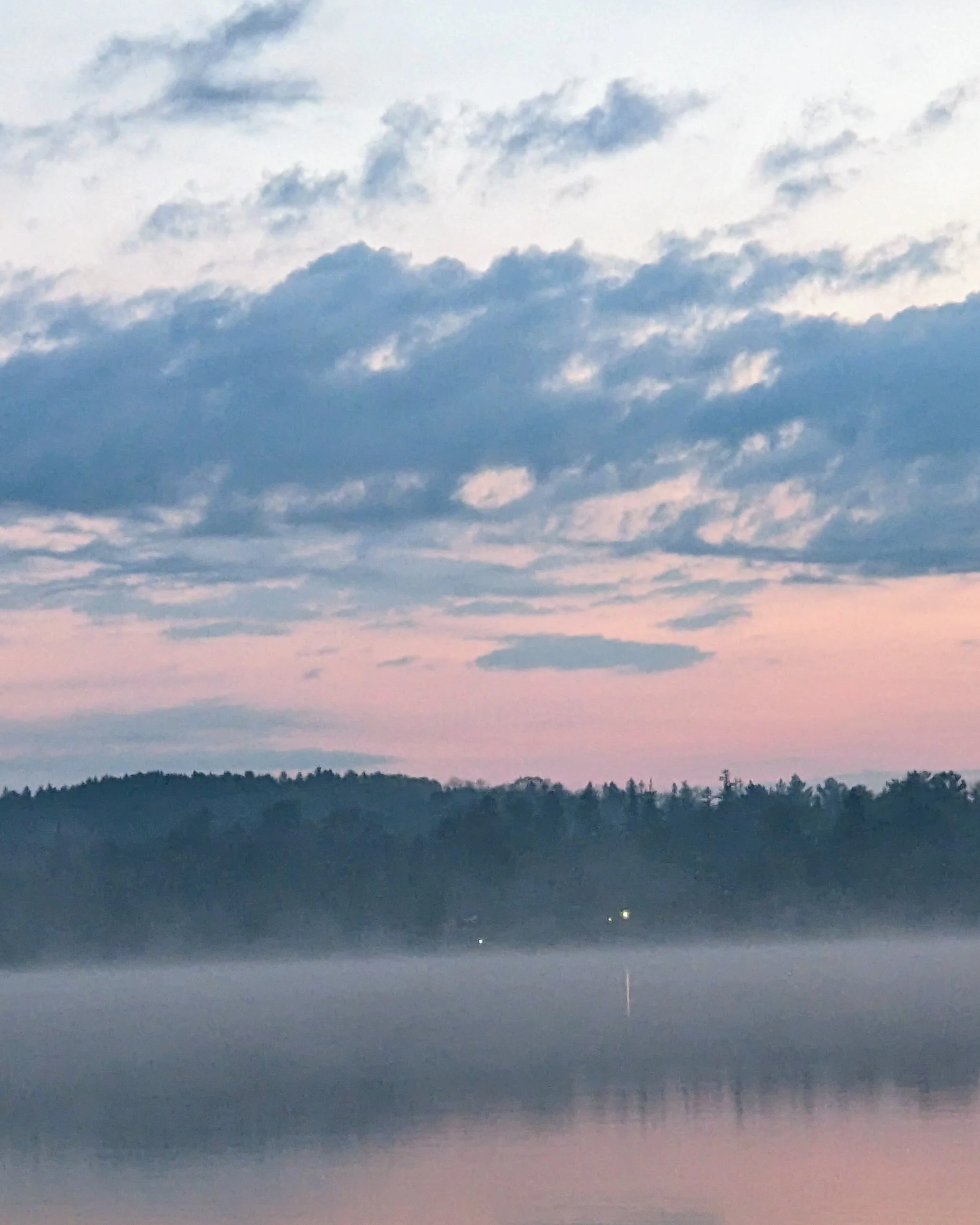
 Time to step out onto the indoor porch and just watch the squirrels zigzag across the yard like tiny project managers.
 Time to plan the lake day even if I don’t feel like I “earned” it.

But here’s the thing: I have. I always have.

My body knows it before my brain does. The moment I’m in that water, held by it, tossed gently back and forth like a ragdoll full of joy — I remember. This is mine. Not as a treat. As a right.

When I’m at the lake with my partner, something changes. We become kids again. Splashing, screaming, sinking into full-bodied laughter with no audience. It’s loud. It’s chaotic. It’s sacred. We look ridiculous and free.

That’s what luxury feels like to me. Not ease for ease’s sake — but ease that restores. That reminds me of who I am when I’m not flattening myself with duty.

Even on quiet days, the balcony is calling. I know it. I watch the wildlife do what it does best — exist fully, without justifying its presence. I want more of that kind of luxury. Not just the candle or the extra snack. But unrushed attention. The kind I often save for other people.

Tool for Your Toolbox: Time as a Form of Care

  • List three time-based luxuries that soothe you. Even five minutes counts.

  • Give one of them full presence this week. Don’t multitask it — meet it.

  • Ask: What does enough look like when I’m not rushing?

Counting: Rewriting How I Measure Worth

When Cameron asked us to track our spending, I understood the logic. What you spend money on reflects what you value. And I’ve done that work. But truthfully? Where I really needed to look was at how I was spending my time.

I tend to live in survival mode — trying to stay productive, be efficient, “get things done.” And when a block of time wasn’t filled with something concrete, I’d regret it. Like rest wasn’t valid. Like a walk or a quiet lunch was a luxury I hadn’t earned.

But I’ve learned — through failure, exhaustion, and repetition — that the best things don’t come from stacking tasks. They come from the lake days I almost canceled. From the porch moments I finally allowed myself without narration.

Time is my most precious resource. So why do I treat it like it belongs to everyone but me?

When I look closely, I realize the “frivolous” choices were actually investments. That wasn’t avoidance. That was living.

When I don’t allow downtime, I’m not being productive — I’m hoarding scarcity. And recognizing that has changed how I count.

Tool for Your Toolbox: Time Alignment Check-In

  • Look at your past week. Where did your time go?

  • Highlight what actually restored you.

  • Ask: What would change if I treated rest as essential, not extra?

A Quiet, Generous Practice

Abundance isn’t loud. It often whispers. Offers the same thing over and over until we’re ready to say yes.

Some days that practice is loud — floating in the lake, laughing until your stomach aches. Some days it’s subtle — a breeze, a blue jay, a quiet stretch of time no one demanded from you.

You don’t have to believe in a Creator to believe this: you are not here to live in depletion.

So ask yourself:

  • What am I already receiving, quietly and without ceremony?

  • Where do I still believe I have to earn what I need?

  • What could change if I stopped keeping score and started noticing the balance?

Abundance isn’t something you’ll win if you behave. It’s something that remembers you, even when you forget yourself.

And it’ll wait. Until you’re ready to count again.

🌿 Milna Cultivates

Good Things Good Days — essays on creativity and becoming.

Originally published on Medium by Milna Cultivates.

What If It’s Still Possible?

July 16, 2025

Week 5 — Recovering a Sense of Possibility

I’m good at making small things happen. Manifesting in miniature — parking spots, discounted flights, good timing on a bad day. But the big stuff? The life-altering, career-defining, soul-level clarity? That’s where I freeze.

At 18, I told myself I wanted to learn everything I could about people, and then write about it. And I did. Quietly. Journal after journal, conversation after conversation, I kept that promise in the shadows. Later, I called myself a storyteller. But most of my stories never made it past whispered confessions to a lover in the dark.

And if I’m honest, my real fairy tale — the one that feels most out of reach — has always been financial comfort. Not millions. Just ease. Just enough room to dream without dread.

Instead, I rushed. Let others define what was reasonable. I chose practical over passionate. I walked roads that looked smart from the outside but made me feel smaller inside. And while I don’t regret learning how to manage a forest or run the math that makes people wince, it’s not what my spirit asked for. It’s what other people applauded.

Limits

Week 5 asks us to question the boundaries we’ve accepted as permanent. Some were handed to me gently, like guidance. Others came wrapped in warnings, in fear, in love dressed up as caution.

Looking back, I see now that many of my limits weren’t truths. They were inherited hesitations. Someone else’s belief about what was possible — or more accurately, what wasn’t.

The Virtue Trap

The phrase landed like a bruise: virtue trap. I’ve long mistaken self-denial for discipline, called burnout “being responsible.” I wore practicality like armor, and the world clapped for it.

But this week I asked, Responsible to whom? And at what cost?

Sacrifice can look noble. But it can also become a slow erosion of self — a wearing down so subtle, you don’t notice until the light’s gone.

Finding the River

This metaphor — that creativity is a river always flowing — gutted me. Not because I lost it, but because I knew it was still in there, beneath all the debris.

So this week, I didn’t aim for brilliance. I didn’t outline or polish. I followed fragments. A line. A question. A hunch. I let it move through me instead of trying to manage it.

And that movement, however small, felt like returning.

Where I Am Now

I’m still wishing I could manifest myself into Nirvana and finally rest on my nimbus. But for now, I’m working on something quieter: slowing down. Learning not to rush myself just because others always did. Letting myself sit, even if it’s awkward. Letting that be enough.

I’m still clunky at the drafting board. Still negotiating with the inner bullies. Still learning to stand beside myself even when I’m afraid of being abandoned for stepping outside someone else’s frame.

It’s an uphill mental battle. But for the first time, I don’t want to skip to the summit.

I want to witness the climb.

Because this — this messy, defiant honoring of self — is possibility in motion.

Reflection Prompt

What part of yourself have you put on hold in the name of being “practical”? What might shift if you gave that part a little room — no deadlines, no expectations — just space to breathe?

🌿 Milna Cultivates

Good Things Good Days — essays on creativity and becoming.

Originally published on Medium by Milna Cultivates.

I Don’t Want My Time Stolen by Algorithms Anymore

July 16, 2025

Recovering a Sense of Integrity

I’m going to be honest — Week 4 of The Artist’s Way could easily be split into two. Every chapter could. There’s just so much to unpack, and the volume of tasks alone could carry you through a month if you let them. I’ve been dancing around this book for years, dipping in and out of it, circling back when something resonates differently. So I’ve got some seasoned thoughts on how to scaffold this chapter to stick.

Honest Changes & Morning Pages (With a Twist)

Julia Cameron opens Week 4 with the idea of “honest changes,” and yeah, it all centers around Morning Pages. I’ve been writing daily since I was a teenager, so just freewriting for three pages isn’t new to me. What has been transformational is what I do after the brain-dump — I end with a message to myself. An affirmation. A little note of power to carry into the day.

Now, let’s be real: not every note is dripping in sunshine. Some mornings are rough, full of heavy truths or “ick” that lingers into my coffee hour. But even when the pages are messy or moody, they keep me grounded. Morning Pages work better for me than meditating in a silent room.

Cameron says, “If you want to work on your art, work on your life.” And that hit me. Dumping the noise on paper each morning helps me move into the day with clearer energy. Sometimes I realize what I need to let go of. Sometimes it’s where I’m leaking energy. Sometimes it’s just a list of half-whispers I might not have admitted out loud. But oddly? A few of those wishes have crept into reality, indirectly.

My takeaway: Morning Pages aren’t about neatness — they’re about honesty. And they subtly train your mind to shift from a fixed mindset to a growth mindset. You either believe your thoughts can shape your day — or you sit in the loop. I choose the former.

Buried Dreams, Aching Knees & Small Comebacks

The chapter also invites us to revisit buried dreams, and for me, that brought up roller skating. I miss dancing on wheels so much. Right now, it’s not realistic — knee injury life — but I’m doing my leg raises, visualizing the comeback. I may be 42, but dreams don’t really expire, they just get detoured.

I looked through some old photos and remembered a time I was hiking almost every day, blogging about it, living in my body and the outdoors. I can’t imagine doing that daily here, in this town — but maybe I could reclaim weekends. A little reconnection with nature, one trail at a time.

Takeaway: If something is calling you, start by imagining the feeling — then work backward and map out a small, doable step. You don’t need to leap; just face the direction.

Reading Deprivation… Or Call It What It Really Is

Let’s talk about the spicy part: reading deprivation. I think Cameron was onto something, but in today’s world, it’s less about books and way more about screens. Honestly, I’ve been practicing what I’d call “social media deprivation” for six years now. It started with one boundary: no phones in the bedroom. That’s the rule in my home. No negotiations.

Over time, I realized the more available I made myself, the more I was depleting my value. No one has ever respected me more for responding to a text instantly. In fact, I’ve usually just handed over my time to people who didn’t deserve it.

These apps — we know the game. They’re built to hook us and drain us. I’ve installed, deleted, reinstalled, deactivated… it’s a dance. But I’ve learned to ask myself, “What are they selling me today?” Because it’s always something. And after I scroll, I never walk away smarter or lighter. Mostly just irritated.

Takeaway: Create your own disconnection rituals. Leave the phone behind. Set blackout hours. Delete the apps you know aren’t serving you. No one needs Instagram. Let your brain get bored enough to discover what it actually craves.

I made a cozy little reading corner in my art studio — just an old mattress with a velvet cover. Now it’s a sacred space to just be. You can create that, too. A no-input zone. A pause.

Conclusion: Living Our Way Into Integrity

Week 4 isn’t about perfection — it’s about peeling back what’s inauthentic and making space for the stuff that feels true. Whether it’s skating again, reclaiming your time from the grip of algorithms, or simply showing up for yourself with a pen in hand, recovering a sense of integrity means listening. Not to noise — but to yourself.

This process asks a lot. And if you’re like me, it might take longer than a week to untangle the threads. That’s okay. There’s no rush in becoming who you already are under the noise.

So start where you are. Let it be messy. Let it be slow. Just let it be yours.

✨ Try This: A Mini Challenge for the Week

  1. Morning Pages Reboot:
    Write three pages each morning this week — but at the end of each, write a single sentence to yourself. It can be an affirmation, a reminder, or just something you needed to hear.

  2. Name a Buried Dream:
    Write down one dream you used to have that you haven’t made space for in years. Don’t judge it. Just name it. Bonus points if you write one small step you could take toward it.

  3. Digital Detox Starter Pack:
     Choose one of the following:

  • Delete one app for seven days

  • Set a “screen-free” hour every evening

  • Keep your phone out of the bedroom

Notice what bubbles up when the distraction quiets down.

🌿 Milna Cultivates

Good Things Good Days — essays on creativity and becoming.

Originally published on Medium by Milna Cultivates.

The Simple Act That Changed Everything: How Showing Up Restored My Voice

July 16, 2025

Week Three of The Artist’s Way: Reclaiming Power Through Creativity

I didn’t realize how much of my life I had handed over to someone else until they were gone. For years, I let my time be consumed, my voice stifled, my autonomy erased under someone else’s control. When my partner finally left, I was left with a single, crushing question: Who am I when I’m not accommodating someone else?

Week Three of The Artist’s Way, Recovering a Sense of Power, forced me to face this question head-on. Julia Cameron speaks of anger, synchronicity, shame, persistence, and criticism, all of which hit me in ways I wasn’t prepared for. Through this chapter, I confronted what I had lost, but more importantly, what I was ready to reclaim.

Anger: A Signal, Not a Burden

Julia Cameron describes anger as a creative compass, not a destructive force, but a message about what we truly need. My anger stemmed from lost time, the realization that someone else had dictated my days for too long. Instead of suppressing that feeling, I let it tell me the truth: I wanted control over my time, my space, my creativity.

For years, I felt my choices weren’t my own. My partner made sure of that, constantly monopolizing my time, making sure I had no room to breathe. I lost opportunities because they decided my schedule. I felt powerless to change it.

And when they left? They walked away on their own terms, not because I finally set boundaries, but because they had taken everything they could. I wasn’t the one who made the choice. That realization sat heavy in my chest.

Anger became a catalyst. It reminded me that boundaries exist to protect my ability to create, not just to keep people at a distance.

Synchronicity: Signs from the Universe

For a long time, I felt like everything I had built had been erased. My past, my creativity, my identity; it all felt overshadowed. But then, in a quiet moment, my professor showed me something that changed everything.

She led me into the craft room, a space filled with scattered art supplies and unfinished projects. I told her how I felt; that I had been abandoned, that I had nothing left, that the years I spent with my partner had stolen everything.

She listened, then reached for a piece of yarn. With steady hands, she tied a small bead onto it and said, “This is your journey.” She continued tying knots, each one representing a life experience I had lived: my childhood, my education, my friendships, my creative passions.

“Nothing was erased,” she told me. “Just because they existed doesn’t mean your story starts over. They were only a piece of it, not the whole thing.”

That piece of yarn now hangs in my studio, a reminder that everything I’ve lived — every choice, every setback, every moment — belongs to me. Creativity is how I continue that journey, and synchronicity is how the universe assures me I’m on the right path.

Shame & The Fear of Expression

I spent years keeping a low profile, not because I doubted myself, but because too many people expected pieces of me I wasn’t willing to give. Creativity felt like something I had to justify, like I had to make sure it served a purpose beyond myself.

The hardest lesson I learned was this: my creative time is mine alone, and I don’t owe it to anyone else.

The more I allowed others to dictate my time, the more I disconnected from myself. I let their expectations shape me. I gave away parts of myself that should have been reserved for my own growth.

But creativity isn’t about proving anything. It doesn’t need to be validated, justified, or made useful for others. It exists because I do.

Growth Through Showing Up

Cameron emphasizes that creative growth isn’t about massive, focused effort: it’s about showing up consistently.

For years, I let circumstances dictate my creative life. I waited until things felt right. I postponed projects when life got messy. I thought I needed the perfect conditions to create something worthwhile.

But the more I read The Artist’s Way, the more I realized that my creative voice wouldn’t return because I willed it to, it would return because I made space for it every day.

The act of showing up, even in small ways, is what builds momentum. It’s what helps purpose emerge.

Handling Criticism & Creating for Yourself

Not everything we create is meant to be shared. Some work is just for us: a way to process, heal, and reclaim parts of ourselves that have been buried under obligation.

I learned this firsthand when I started prioritizing my own creative projects. For years, my time had been dictated by others: my partner, my employer, the expectations that seemed to come from everywhere. But when I finally started making space for myself, I saw a pattern unfold: the moment I reclaimed my time, people tried to take more of it.

My employer, who had been fine with my workload before, suddenly doubled it once they realized I was dedicating time (outside of work) to my own passions. It wasn’t about productivity; it was about control. Some people don’t want you to create because they don’t want you to grow beyond them.

That period serves as a warning to me now: never let someone else’s fear of losing control dictate your choices. I’ve let it happen before, and I’ve seen how easily it can consume opportunities.

But creativity has taught me something: your work does not need permission to exist. Whether it’s beautiful or ugly, refined or chaotic, every creation is part of the process. We make art not just to be seen but to heal, to transform, to reclaim ourselves.

Final Thoughts: The Power of Choosing Yourself

Reclaiming my voice wasn’t about waiting for inspiration. It wasn’t about proving my worth to anyone.

It was about choosing myself, every single day.

I have learned that autonomy is mine to protect.

That anger can be direction.

That synchronicity is real.

That shame has no place in creativity.

That growth comes from consistency.

That criticism does not define me.

Most of all, I have learned that my time belongs to me, and I will never let someone else take it away again.

If you’re struggling with these feelings, I hope you realize this, too: Your creativity is yours. Your story is yours. Your time is yours. Protect it. Honor it. And keep showing up.

🌿 Milna Cultivates

Good Things Good Days — essays on creativity and becoming.

Originally published on Medium by Milna Cultivates.

Reclaiming My Creativity: Breaking Free from Distraction & Self-Sabotage

July 16, 2025

Two Weeks into Creative Recovery: Breaking Old Patterns & Reclaiming Time

This past week, I worked through Chapter 2 of The Artist’s Way, which focuses on Recovering a Sense of Identity. This is my third time reading the book, but unlike previous readings, I’m actively applying its principles; not just reflecting, but restructuring my habits. This isn’t just about creativity; it’s about commitment, discipline, and rewiring my relationship with time itself.

I’ve spent months journaling about how others hijack my time for their own needs. I’ve pulled away from people who habitually disrupted my workflow, recognizing that creative autonomy requires withdrawing the energy we unconsciously give away. But as I worked through this chapter, I realized something even more unsettling: not all crazymakers are external. Some are entirely internal, disguised as distraction, avoidance, and self-doubt.

The Internal Crazymaker: Avoidance Disguised as Productivity

Julia Cameron describes Crazymakers as people who thrive on creating chaos, pulling others into their dysfunction, and stealing time from artists. But as I examined my own creative resistance, I saw that my biggest disruptor wasn’t another person; it was the distractions I allowed myself to entertain.

I’ve been struggling to show up consistently for my art. Instead of finishing pieces, I pause when things get difficult. Instead of solving composition challenges, I drift into internet rabbit holes, studio organization, or “helpful” tasks that don’t bring me closer to my goals. What I thought was avoidance of frustration was self-sabotage masked as being “productive elsewhere.”

Recognizing these patterns was one thing. Changing them required real intervention.

Time Perception & Engagement Resistance

Another realization hit me hard: I consistently underestimate the time required for creative work. Tasks that I assume will take an hour often stretch into three. Time moves differently when I’m engaged in art; sometimes slow and agonizing when I struggle, sometimes fast and effortless when I find flow. But because I never measured it realistically, my expectations were skewed, feeding a cycle of frustration and avoidance.

So I started tracking. Not rigidly, but observing how long creative tasks actually took, without adjusting my expectations to match my instinctive guess. Recalibrating my perception of time is part of recovering a sense of identity, because knowing how long work takes is knowing myself.

Strategies I’m Testing to Rewire My Creative Routine

I don’t want these reflections to just be personal musings; I want them to be useful for others who might be battling creative resistance. These are strategies I’ve been testing to break old habits:

✅ The Creative Check-In System — Before each session, I ask:

  • What resistance feels strongest right now — avoidance, perfectionism, frustration?

  • Am I truly engaged, or slipping into distractions masked as productivity?

  • What’s one small step I can take to keep momentum before I allow a break?

✅ Pre-Task Rituals for Writing & Art –

  • Writing: Journaling first, timed freewriting, intentional focus shifts (like tea or music)

  • Art: Gesture sketches, intentional color mixing, lighthearted warm-ups before committing to a piece

✅ Interrupting the Avoidance Cycle –

  • Before allowing distractions, I commit to 20 minutes of uninterrupted engagement first

  • Instead of quitting mid-frustration, I place one more mark, one more stroke, one more word before stepping away

✅ Reframing Effort as Growth –

  • Effort isn’t proof of failure, it’s proof of engagement

  • The struggle phase is not a reason to stop, but an indicator of progress

Redefining Boundaries to Protect Creative Time & Personal Commitments

Creativity requires dedicated space, and protecting that space isn’t just about setting personal boundaries; it’s also about controlling how your time is framed to others. If people perceive artistic work as flexible or optional, they may challenge it, dismiss it, or try to shift your priorities to something they deem “more important.” This applies not only to creative time but to any commitments you make.

1. Calling It “Work” Instead of Justifying It

People rarely question traditional job hours, but creative time often gets treated as secondary unless it’s framed correctly. Instead of explaining what you’re working on, define it simply as “work”:
✅ “I have to go to work” instead of “I need time to sketch.”
✅ “I have scheduled work hours” instead of “I’ll be working on a project.”
✅ No details, no discussion, just a firm, professional statement.

This prevents conversations where others might try to rearrange your priorities or poke holes in your availability.

2. Implementing the 24-Hour Rule for Personal Commitments

In the past, last-minute requests, especially from family and close friends, made it difficult to say no, even when they didn’t align with your personal schedule. To prevent this:
✅ Require 24-hour notice — Let people know that you need at least a day’s notice to commit to anything.
✅ Create space before responding — Instead of immediately saying yes, practice saying “Let me check my schedule,” giving yourself time to evaluate whether an engagement makes sense for you.
✅ Avoid emotional obligation-based decisions — Just because an invitation is urgent or last-minute doesn’t mean it deserves priority over your plans.

3. Managing People Who Challenge Creative Priorities

Even when boundaries are clear, some people will still test them — either intentionally or out of habit.

  • If someone insists you can do it “later”, the response is simple:
     “This is the time I’ve scheduled. I’m unavailable.”

  • If they suggest their needs are more important, redirect:
     “I understand that’s urgent for you, but I have work commitments right now.”

  • Avoid discussion-based justifications; defend the boundary without negotiating.

4. Creating a Psychological Barrier for Yourself

Beyond managing others, you also have to reinforce this shift internally.

  • If creative time is treated loosely, it’s easier to let guilt, distraction, or other priorities creep in.

  • Remind yourself: “This isn’t about permission, it’s about commitment. My work requires time, just like anyone else’s.”

  • The less flexibility you allow in how you frame your time, the more solid the boundary becomes.

Final Thought: Time is Sacred When You Treat It as Non-Negotiable

People respond to the framing you set. If you present creative time as fluid, they’ll assume it can be rearranged. If you present it as work, it holds weight, structure, and permanence. The same goes for personal commitments; the more structured your approach, the less space others have to disrupt it.

I encourage readers to ask themselves:

  • Have I clearly defined my creative time, or do I allow it to be flexible for others?

  • Do people in my life unintentionally devalue my artistic work? How can I correct that?

  • How can I reinforce boundaries with confidence, rather than hesitation?

Protecting creative time isn’t about shutting people out; it’s about showing up for yourself first so your artistic work thrives.

🌿 Milna Cultivates

Good Things Good Days — essays on creativity and becoming.

Originally published on Medium by Milna Cultivates.
Trusting the Process: What Happens When You Just Start

July 16, 2025

Reclaiming Creativity: Learning to Start Without Perfection

I used to think creativity needed the perfect conditions: space, time, energy. But this week, I realized the hardest part isn’t the conditions. It’s simply starting.

For years, I’ve balanced different schedules, none of them feeling entirely right except when I was single and alone. There’s an ease in managing only myself, but that’s not reality anymore. Now, between adapting to life post-night shift, navigating a shared space, and pushing against my own internal resistance, I find myself wondering, how do I create when life doesn’t feel ideal?

This past week was my first deep dive into The Artist’s Way, specifically Chapter One: Recovering a Sense of Safety. And while I expected this process to feel freeing, I quickly realized that I still wrestle with creative doubt, discipline, and letting go of the pressure to always be productive.

Morning Pages — Showing Up No Matter What

I’ve written Morning Pages on and off for years, though before The Artist’s Way, they were simply thoughts and lists, a way of sorting my mind. Writing has been part of my daily rhythm since childhood, ingrained in me through college writing courses.

But it wasn’t until my third time reading The Artist’s Way that I finally understood the true purpose of Morning Pages. They aren’t just for dumping thoughts onto a page, they’re about building the habit of showing up, regardless of how I feel.

And that — showing up — is where I still struggle.

Morning Pages are supposed to be written first thing in the morning, yet my routine has its own flow. No exaggeration, I roll from one bed to another.

After waking up, I instinctively move from my bedroom to my velvet mattress in my art studio, tucked beside my book nook and within reach of my mini rex rabbit, Frankie; aka “The Other Woman.” Every morning without fail, I crawl into my studio bed, pet Frankie, and tell her about my dreams, my plans, my thoughts for the day.

Frankie demands attention, and I gladly give it to her.

Still, progress is happening. Out of seven days, I’ve written Morning Pages four times, and it got easier once I left my notebook right next to my bed. Frankie wasn’t thrilled about it — she kept insisting on more pets, but the pages got done.

This is what I’m working toward: building the discipline to write no matter what, trusting that consistency will come with time.

The Go-Go Mindset & Releasing Guilt

One of the biggest struggles I faced this week was confronting my deeply ingrained “Go-Go-Go” mindset; the pressure to constantly be doing, producing, achieving.

Creativity isn’t supposed to follow the same rules as productivity, but still, I find myself feeling guilty for not working toward financial security in every moment. Most of the time, my life is filled with beautiful moments, ones that strengthen my connection to myself and my partner. But even within those moments, I battle the thought:

“Am I wasting time?”

Even when I reflect on past achievements, I catch myself falling into the same cycle.

During college, I somehow juggled a night job while handling 15+ credits per semester. I look back now and can’t fathom how I did it, it just felt normal at the time.

But what I often forget is that, even amidst that chaos, I still had fun. I wasn’t a machine, I made space for joy, spontaneity, and creative expression.

So why is it so much harder now to embrace that freedom?

These three affirmations helped me center myself this week:

“My pace is sacred. I honor where I am, not where I ‘should’ be.”
 “Rest is not wasted time; it’s fuel for what’s next.”
 “I release guilt for choosing peace. I don’t owe my energy to urgency.”

If creativity is truly about self-expression, then it has to exist outside of hustle culture. I’m trying to relearn how to just be, without questioning the value of my time every step of the way.

Artist Date — Rediscovering Playfulness in Creativity

One of the most liberating aspects of The Artist’s Way is the concept of the Artist Date: a scheduled moment of creativity and exploration, with no pressure to produce anything “useful.”

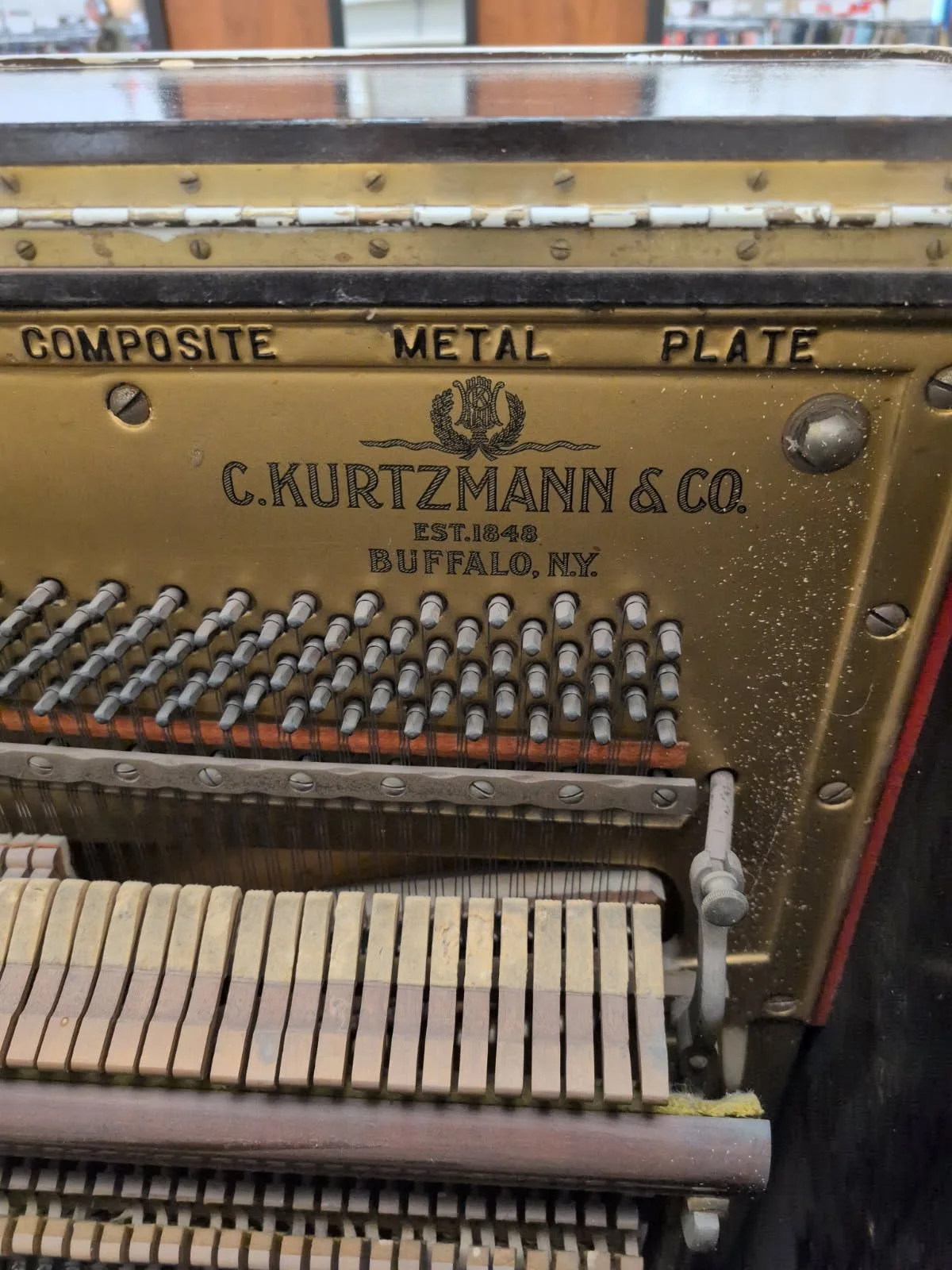
This week, I kept my Artist Date simple, exploring a thrift shop (where I nearly convinced myself to buy a piano) and visiting my local library, a space I wish I frequented more often.

There’s a certain kind of whimsy in moments like these, the freedom to wander, to stumble upon unexpected treasures (like a Santana CD for just a dollar), to reconnect with places that spark inspiration without needing them to serve a greater purpose.

But as I reflect on this first Artist Date, I realize that I want to push myself further in the coming weeks.

I miss the intentionality of my hiking days, where I committed to being outdoors no matter what, treating nature as both a refuge and an incubator for creativity. Moving forward, I want to design Artist Dates that get me outside again, reconnecting with that part of myself that once felt so effortless.

Artist Dates are a reminder that creativity thrives in playfulness, and that making myself a priority isn’t selfish. It’s essential.

The Oracle Cards — Accepting the Process, Not the Pressure

This week, I struggled to create oracle cards. They were supposed to be an easy project, just watercolor splashes, a low-pressure creative exercise.

And while I did paint, nothing came of it, at least not in the way I expected.

The surprising part? I wasn’t frustrated by that.

I was content keeping it to myself, letting the process exist without forcing it into something tangible. The truth was, I simply didn’t have the headspace to make anything I wanted to share, and I think that’s okay.

A major part of my challenge was logistics. We were reorganizing the studio, shifting the space to accommodate someone else, which naturally took up mental energy.

But even beyond the logistics, I know how to create in any space; I’ve always adapted, always found ways to make things. So this wasn’t about the space itself; it was about struggling to start.

If I build a consistent creative practice, I think over time I’ll feel more willing to share. But right now, my focus is simply giving myself space to create without pressure, knowing the rest will follow.

Final Thoughts — A New Kind of Progress

This week wasn’t about finishing something perfectly. It wasn’t about forcing results. It was about learning how to start, even in uncertainty.

Progress isn’t always tangible, but I feel it in the small things:
Leaving my notebook next to my bed.
Writing my affirmations even when I doubted them.
Allowing myself to pause without guilt.

I don’t have to force creativity into a rigid schedule. I don’t have to prove my productivity to myself.
I just have to keep showing up, one moment at a time.

🌿 Milna Cultivates

Good Things Good Days — essays on creativity and becoming.

Originally published on Medium by Milna Cultivates.
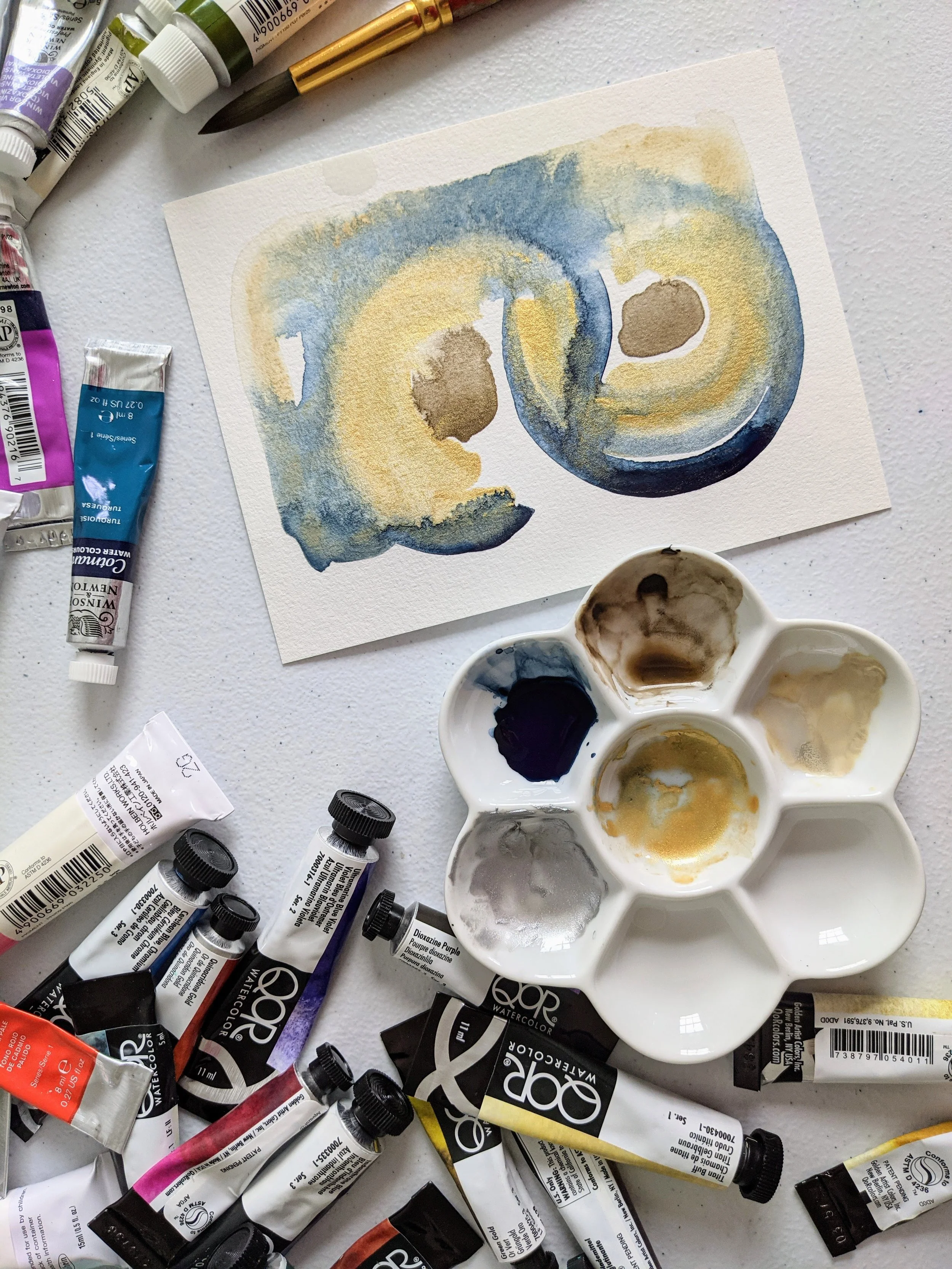
A 100-Day Journey: Prioritizing Creativity Without the Pressure to Hustle

July 16, 2025

Today Is Good Enough to Start

I don’t need to wait for the perfect moment. I’ve spent years starting, stalling, and stopping: always putting my creative passions last. Something would inevitably drop in my path: a demanding boss, a personal obligation, or the sheer exhaustion of keeping up with life, and I’d pause.

But I’m tired. Tired of putting myself second to employers who expect my time outside of work. Tired of letting distractions pull me away from what truly fulfills me. Tired of making space for other people’s needs while neglecting my own creative spirit.

Learning to Set Boundaries

Over the past year, I’ve been reclaiming my time. It started with a simple act, telling my manager that I wasn’t available for last-minute requests. I had plans. I wasn’t going to drop everything for someone else’s convenience. It was the first time I held firm, and I felt relief instead of guilt.

This boundary-setting has been a process, shaped by past experiences. Three years ago, I launched creative workshops, only for my employer to increase my workload from 40 hours a week to 60, deliberately keeping me too busy to pursue my own growth. I didn’t fight back then; I just let it happen. And I regret it.

Now, I refuse to entertain this kind of self-sacrifice disguised as dedication. I have seen what happens when I put my own projects last, and I am done repeating the cycle.

Releasing Perfectionism & Unfinished Ideas

Since I was a teen, perfectionism has made it impossible to finish personal projects, especially the ones without an immediate paycheck attached. I have notebooks filled with ideas that never materialized because I convinced myself I had “more important” things to do.

Four years ago, I planned a Full Moon Event series: a six-month journey where I hosted creative workshops centered on reflection, spirituality, and self-expression. One of the events focused on tarot card creation and shadow work, guiding participants to craft their own symbolic card and explore personal themes.

At first, the idea felt powerful, fulfilling. But when an acquaintance invited someone else into the project, it slowly shifted into something else: an informal craft sale, far removed from my original vision. I withdrew, frustrated but reflective. That experience taught me two crucial lessons:

  1. Creative collaborations need contracts.

  2. I have to make time for serious projects and guard them fiercely.

Claiming the Gift of Time & Defining the Project

For the first time in ages, I have space. My seasonal job has ended, leaving me with the rare opportunity to focus on myself. More importantly, I have the support of a partner who truly understands the value of this journey.

So, for the next 100 days, I will fully commit to The Artist’s Way by Julia Cameron, applying its principles to nurture my creativity. Each day, I will create an oracle card, a visual representation of inspiration, paired with a personal mantra to keep me anchored in this journey. These cards will become both a creative practice and a tangible reflection of my growth.

I will also provide weekly updates on my progress, sharing insights from The Artist’s Way, personal breakthroughs, and challenges I encounter along the way. This journey is as much about consistency and discipline as it is about self-expression, and I’m ready to see what unfolds when I prioritize creativity over obligation.

Why This Challenge Matters

This journey isn’t just about making a deck of oracle cards. It’s about breaking patterns.

  • Prioritizing a creative project without expecting financial gain.

  • Undoing the hustle mentality that tells me creativity must be monetized.

  • Exploring self-expression, discipline, and joy, without letting perfectionism or fear of failure stop me.

I’m ready to see what happens when I choose creativity, not obligation.

Follow along, and let’s see where this journey takes us.

Have you ever struggled with prioritizing creativity? What would 100 days of artistic exploration look like for you?

🌿 Milna Cultivates

Good Things Good Days — essays on creativity and becoming.

Originally published on Medium by Milna Cultivates.

© 2026 Good Things, Good Days — Created by Milna Cultivates